
Eric Schmutz for Market Share Blog | July 15, 2026
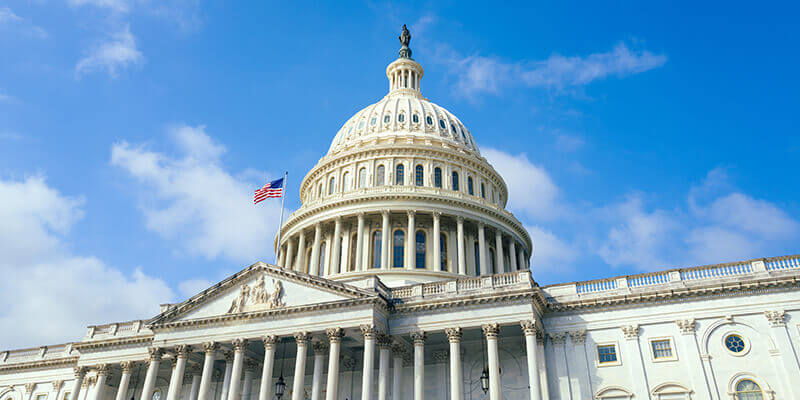
Last weekend, House Speaker Mike Johnson (R-LA) and members of his leadership team retreated to Camp David with a number of GOP members to discuss strategies for advancing a third budget reconciliation bill. Republicans hold a narrow majority in the House, with 219 Republicans, 215 Democrats and one independent. In the Senate, Republicans hold a 53-47 majority, but 60 votes are needed to overcome an opposition filibuster effort that would block legislation from advancing. But Senate procedures make a budget reconciliation bill immune to a filibuster, allowing it to advance legislation with a simple majority vote. As a result, congressional Republicans and the administration have spent much of this Congress relying on budget reconciliation as a means of advancing priorities through the Senate.
Congressional Republicans were relatively successful in using reconciliation to pass major tax legislation last summer as well as funding for the Department of Homeland Security, which ended the partial government shutdown earlier this spring. Now, they are pursuing a third reconciliation bill. President Donald Trump would like to use it to fund his Department of Defense spending priorities, while House Speaker Mike Johnson has promised to include election security measures from the SAVE America Act.
Budget reconciliation was never intended to be the legislative tool it has become today. It was originally created as a procedural mechanism to help Congress align spending and revenue with its overall budgetary framework.
Over the past several decades, however, increasing political polarization and the Senate’s 60-vote threshold for overcoming a filibuster have transformed reconciliation into the primary vehicle for advancing partisan priorities.
While President Ronald Reagan used reconciliation during his first term to pass his Economic Recovery Tax Act of 1981, the first major partisan use of reconciliation (with the president and both chambers of Congress held by the same party) occurred in 1993, when President Bill Clinton and congressional Democrats passed the Deficit Reduction Act. President George W. Bush and congressional Republicans later used the process to enact the Economic Growth and Tax Relief Reconciliation Act in 2001 and the Jobs and Growth Tax Relief Reconciliation Act in 2003. Divided government largely sidelined the process until 2010, when President Barack Obama and congressional Democrats used reconciliation to pass portions of the Affordable Care Act. It was later used in 2017 by Trump and congressional Republicans to pass the Tax Cuts and Jobs Act in his first term.
View archived blog posts at: http://naiopcharlotte.wordpress.com