
Maria Gatea for Market Share Blog | November 10, 2026

Suburbs still win the self-storage race, but a surprising group of metros is heading downtown.
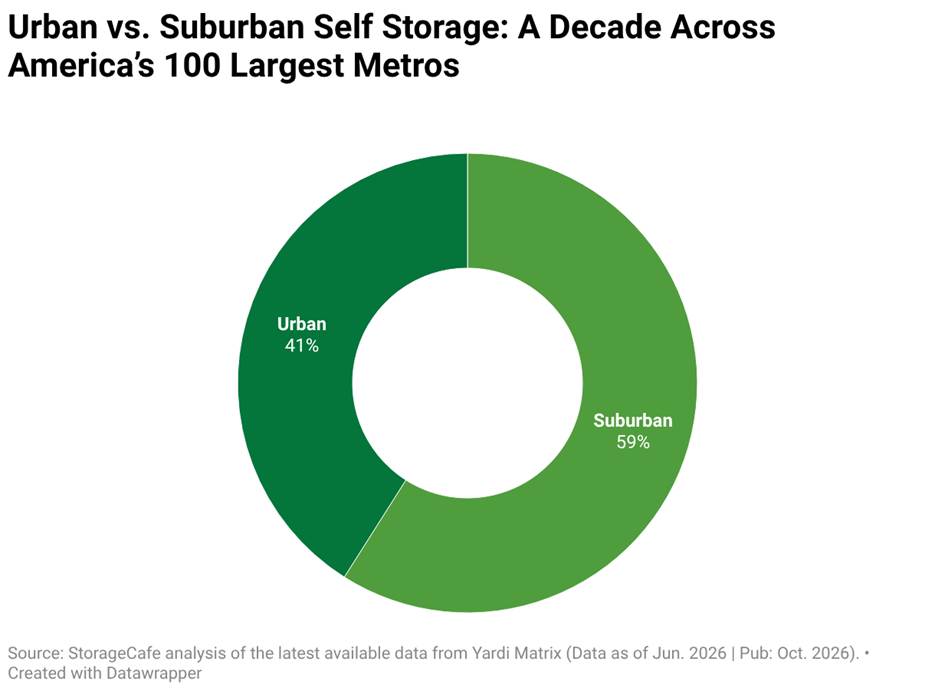
Self-storage development continued on a mostly suburban path over the past decade (2016 to 2025), with 59% of all new construction delivered during that period, amounting to 261 million square feet, located outside city centers.
Although urban self-storage is attractive, with population density and smaller living spaces creating extra demand, there are significant hurdles to building it, including but not limited to the scarcity of suitable land plots and, in many cities, strict zoning laws.
Even so, among the country’s 100 largest metro areas, 41 delivered at least 50% of their inventory in high-density urban areas over the past decade. StorageCafe’s latest study on urban vs. suburban self-storage development analyzed both sides of the coin: where suburban self-storage dominates, and where urban self-storage is taking flight.
The New York metro area leads in sheer square footage of suburban self-storage.
The New York metro area delivered a remarkable 25.8 million square feet of self-storage over the past 10 years, with 69% of it located in the suburbs — hardly surprising given New York City’s zoning laws and land availability and costs. In fact, the almost 8 million square feet of urban self-storage delivered here in the same period can be considered an impressive achievement for the sector, considering the headwinds.
View archived blog posts at: http://naiopcharlotte.wordpress.com